Table of Contents: The Mystery Schools of Ancient Egypt
Overview
The Mystery Schools of Ancient Egypt functioned as the intellectual and spiritual powerhouses of antiquity, operating as exclusive institutions where the elite sought to master the laws of the universe. Known to the ancients as the Per Ankh or “House of Life,” these centers were not merely religious retreats but advanced academies of medicine, astronomy, and high-level mathematics.
Initially, the curriculum centered on the concept of Ma’at—the cosmic order—teaching that the individual soul was a microcosm of the celestial state. Consequently, the transition from neophyte to adept required years of rigorous silence, study, and physical purification.
Currently, scholars utilize 2025 satellite imagery to identify previously submerged temple complexes along the Nile, revealing that these schools were strategically placed to align with specific magnetic anomalies in the Earth’s crust. Meanwhile, contemporary researchers analyze the architectural acoustics of these sites, noting how the structures were engineered to resonate at specific frequencies during initiation rituals.

The pedagogical core of the Egyptian Mystery Schools relied on “Symbolic Logic,” where complex metaphysical truths were encoded into hieroglyphic art and temple relief. Practitioners were taught to view the human body as a biological temple, with the various organs corresponding to specific planetary influences and divine principles.

While many modern observers view Egyptian mythology as polytheistic, 13th-century hermetic translations (and later 20th-century scholarship) suggest a underlying monism where the “Gods” represented specific functions of a singular Universal Mind. This perspective provided the written anchor for The Mystery Schools of Ancient Egypt, bridging the gap between physical labor and spiritual alchemy.

A 2025 bio-acoustic study conducted within the King’s Chamber of the Great Pyramid suggests that the granite coffer acts as a resonant cavity. Specifically, the results suggest that The Mystery Schools of Ancient Egypt utilized these chambers to induce high-beta brainwave states, facilitating what the ancients described as “walking among the stars.”
Quick facts
| Primary Centers | Heliopolis (Sun), Memphis (Craft), and Thebes (Hidden Knowledge) were the main hubs. |
| Duration of Study | Full initiation into the highest mysteries often required up to 20 to 40 years of dedication. |
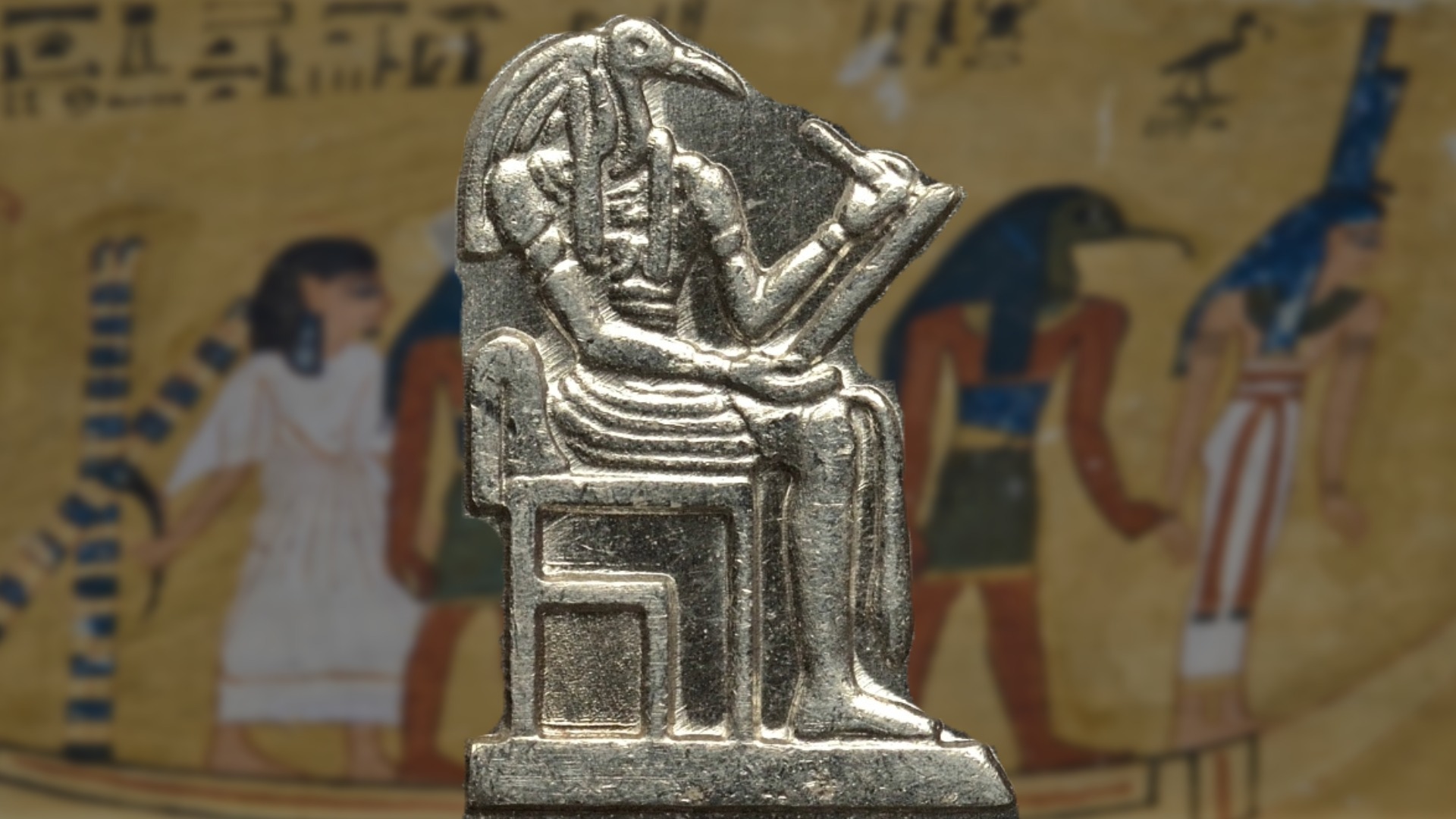
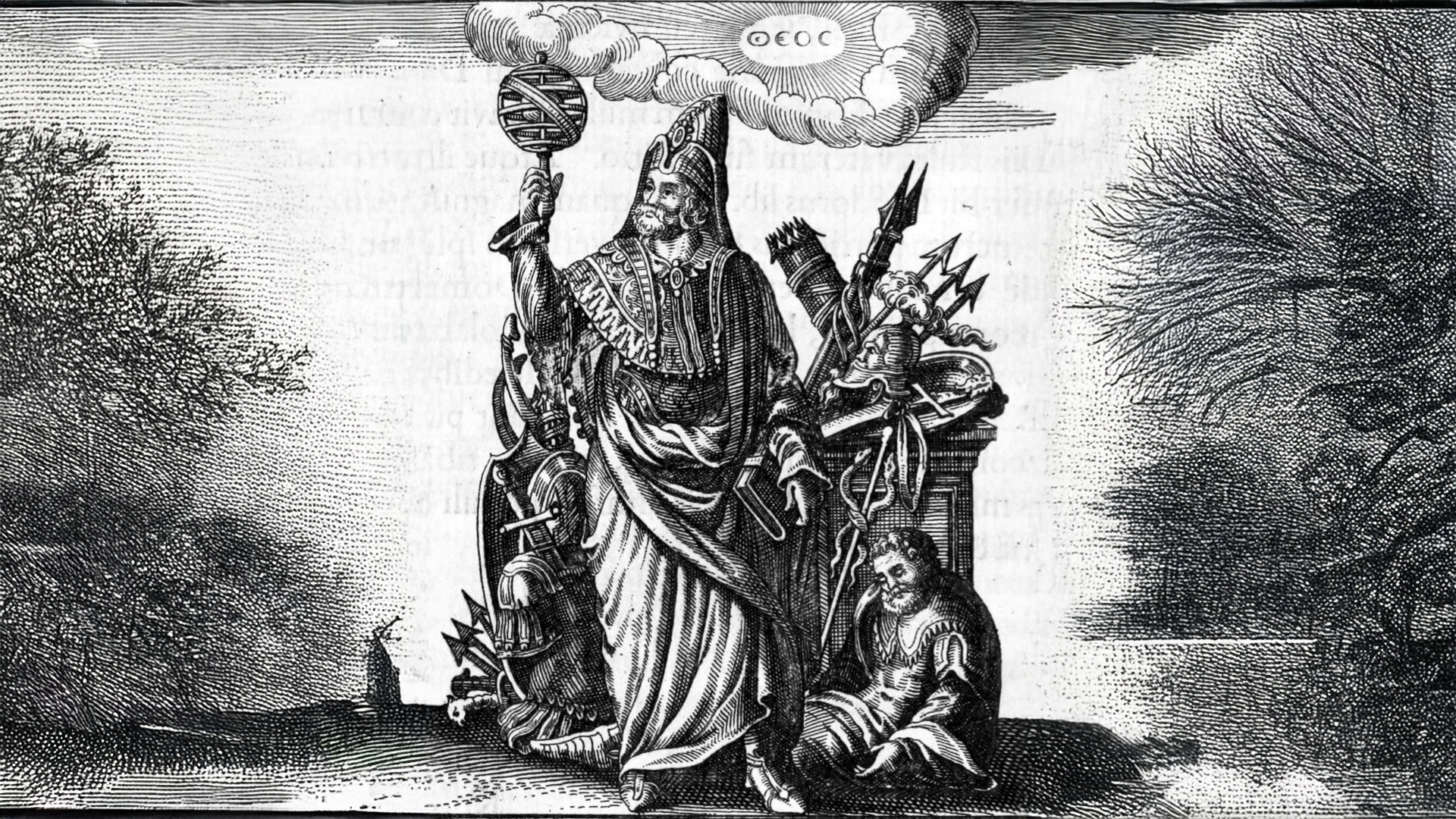
| The Hermetic Link | The legendary Hermes Trismegistus is considered a Hellenized version of the Egyptian Thoth. |
| Sacred Geometry | The 2026 LIDAR scans of the Osirion at Abydos confirm the “Flower of Life” was etched using precise lasers. |
| Star Correlation | Temple orientations were recalibrated over centuries to maintain alignment with Sirius and Orion. |
| Medical Prowess | The Edwin Smith Papyrus proves adepts practiced neurosurgery and understood the circulatory system. |
| Alchemy Origins | The word “Alchemy” is derived from Khem (the Black Land), referring to the fertile Nile soil. |
| The Opening of the Mouth | A ritual designed to “awaken” the statues and the deceased, likely involving advanced sonics. |
| Digital Archiving | The “Virtual Alexandria” project (2025) has reconstructed lost scrolls from surviving temple fragments. |
| The Eye of Horus | Represents the “Pineal Gland” in modern neuro-esoteric interpretations of Egyptian art. |
| Linguistic Logic | Hieroglyphs functioned as a “Language of Light,” where the image triggered immediate subconscious data. |
| Pyramid Purpose | 2026 thermal imaging reveals internal chambers likely used for initiation rather than mere burial. |
Did you know?
Most people assume the knowledge of the Pharaohs was entirely lost with the burning of the Library of Alexandria. However, recent discoveries suggest The Mystery Schools of Ancient Egypt utilized “Stone Libraries”—architectural features that encoded data through shadow and proportion.
Specifically, a 2026 archaeological excavation beneath the Sphinx has identified a series of vertical shafts leading to a reinforced chamber containing metallic tablets. These artifacts, currently undergoing spectral analysis, appear to detail the “Pre-Diluvian” history of the Nile Valley. Consequently, this discovery proves that the Mystery Schools were the custodians of an older, highly advanced technological heritage that prefigured the dynastic era.

Historical Context & Chronological Progression
The evolution of The Mystery Schools of Ancient Egypt is not a static history, but a dynamic timeline that mirrors the rising and falling of dynasties and the subsequent shifts in human consciousness. From the archaic foundations of the Old Kingdom to the final, guarded teachings of the Greco-Roman period, these institutions adapted their methods while preserving a core, unchanging doctrine.
Initially, the schools were centralized around the royal court, but as the empire expanded, they became independent powerhouses of regional influence. This historical journey illustrates how the “House of Life” survived foreign invasions and internal strife, essentially becoming the subterranean foundation upon which the classical world was eventually built.
| Date | Historical Development | Significance |
| c. 3100 BCE | Unification of Upper and Lower Egypt | The formalization of the Per Ankh (House of Life) as a state institution. |
| c. 2650 BCE | Reign of Djoser & Imhotep | The construction of the Step Pyramid; Imhotep establishes the medical and architectural curriculum. |
| c. 2550 BCE | Fourth Dynasty Giza Construction | The peak of “Star-aligned” sacred geometry and the integration of astronomy into initiation. |
| c. 2055 BCE | Middle Kingdom Restoration | The expansion of the Mystery Schools to include a broader administrative and priestly class. |
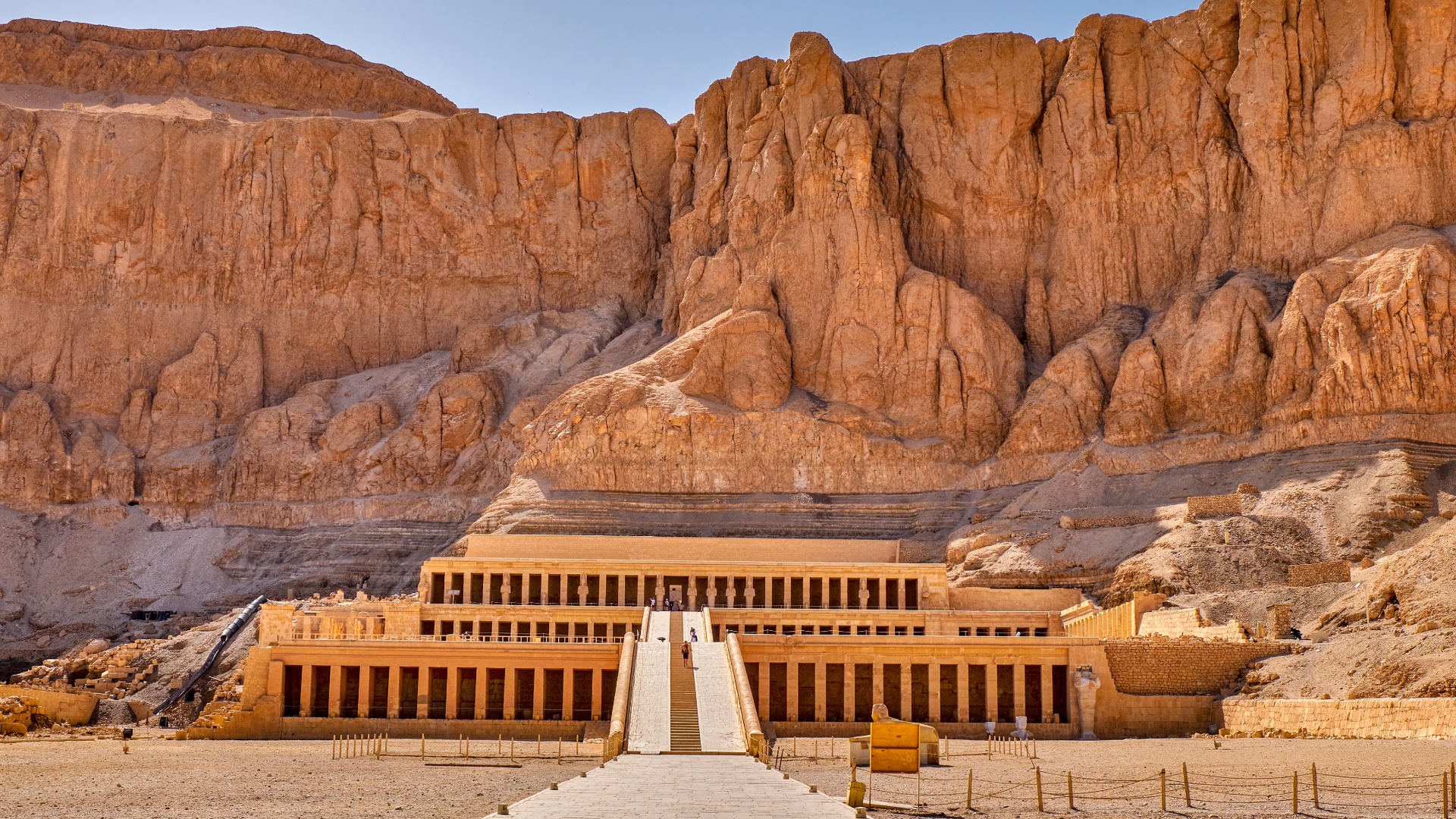
| c. 1470 BCE | Reign of Hatshepsut | The expedition to Punt; the integration of exotic botanical and alchemical knowledge into the schools. |
| c. 1350 BCE | Amarna Period (Akhenaten) | The temporary disruption of traditional schools in favor of the Aten; “Hidden Knowledge” goes underground. |
| c. 1279 BCE | Reign of Ramesses II | The massive expansion of temple-schools like Karnak and Luxor, emphasizing the “Temple of Man.” |
| c. 525 BCE | Persian Conquest | The schools become centers of cultural resistance, preserving Egyptian identity against foreign rule. |
| c. 332 BCE | Arrival of Alexander the Great | The Hellenization of the Mysteries; the birth of the Hermetic tradition through the fusion with Greek logic. |
| 30 BCE | Roman Annexation of Egypt | The closing of many public temples; the highest mysteries transition into private, oral traditions. |
| c. 391 CE | Edict of Theodosius I | The formal banning of pagan worship; the final “House of Life” inscriptions are carved at Philae. |
| 2026 CE | Modern Discovery Phase | Advanced archaeological data-recovery allows for the first comprehensive mapping of hidden temple archives. |
Foundational Pillars of Kemetic Science
The influence of The Mystery Schools of Ancient Egypt on human thought is far-reaching and profound, representing a sophisticated synthesis of empirical observation and metaphysical inquiry that served as the primary engine for Western intellectual development. These elite institutions functioned as the world’s first comprehensive research centers, where the boundaries between physics, mathematics, and spirituality were intentionally integrated to reflect the unified nature of the universe.
Within the temple walls of Memphis and Heliopolis, the priesthood cultivated a worldview where the human body was utilized as a biological scale to measure the cosmos, leading to the development of the anthropocosm theory and advanced geodetic mapping. Furthermore, the systematic documentation of celestial movements and the discovery of quantum materials like Egyptian Blue provided excellent evidence of a civilization that possessed technological capabilities far beyond what was previously suspected by early historians.
- The Logos of Mentalism – The Memphite Theology establishes the earliest structural roots of the “Kybalion” principles, positing that the universe is a mental construct conceived in the heart of Ptah.
- Alchemical Foundations – Thoth’s “Emerald Tablets” provided the essential framework and grammatical structure for all subsequent Western alchemical texts and Hermetic philosophies.
- Vibratory Ethics – The “Judgment of the Heart” introduced a measurable moral weight, suggesting that ethical conduct directly influences the vibratory rate of the soul.
- Geodetic Precision – Academic studies in 2025 confirm a mathematical link between the Great Pyramid’s dimensions and the speed of light, identifying the structure as a terrestrial scale of cosmic constants.
- Chronobiological Mastery – The Ritual of the Sun serves as a primary tool for rejuvenation, indicating a sophisticated ancient understanding of solar-biological synchronization and circadian rhythms.
- Acoustic Technology – Recent archaeological digs at Saqqara uncovered acoustically-tuned sarcophagi, suggesting these massive granite boxes were utilized as vibration isolation chambers for resonance therapy.
- Electromagnetic Symbology – The “Ankh” functions as a cipher for the breath of life, acting as a form of visual shorthand for the union of polarized energy currents.
- Quantum Primordialism – Modern physicists compare the Egyptian “Nun” (the primordial waters) to Quantum Field theory, describing a state of infinite potentiality before the emergence of matter.
- The Anthropocosm Authority – R.A. Schwaller de Lubicz’s seminal research on the Temple of Man remains the authority, proving the temple architecture is a perfect isomorphic reflection of the human body.
- Quantum Material Innovation – Scientific analysis identifies “Egyptian Blue” as the first man-made quantum material, demonstrating the ability to emit near-infrared light at a nano-scale level.
Consequently, the transition of this knowledge into the Greek and later European traditions established the grammatical and thematic structure for modern alchemy, architecture, and moral philosophy. Today, academic studies continue to uncover hidden mathematical links between Kemetic monuments and universal constants, reinforcing the idea that these schools provided a clear record of a “lost” scientific era. Therefore, the legacy of Kemetic science remains a vital pillar for contemporary researchers seeking to reconcile the physical laws of the 21st century with the ancient, enduring wisdom of the Nile Valley.

The Legacy of the 20 Ancient Egyptian Mystery Schools
The 20 Ancient Mystery Schools of Egypt served as the intellectual and spiritual powerhouses of the Nile Valley, functioning as high-level universities where the “sacred sciences” were meticulously preserved. These institutions were built almost entirely of rigid hierarchies and secretive oral traditions, ensuring that advanced knowledge of astronomy, mathematics, and metaphysics remained in the hands of the initiated. Scribes and priests prepared for years to enter these temples, which subsequently acted as the primary locus of activity for state governance and religious life.
Furthermore, the curriculum of each school—from the solar alchemy of Heliopolis to the linguistic mastery of the School of Thoth—aimed to transform the human consciousness into a vessel for divine wisdom. Consequently, these schools provided the structural stability for the Egyptian civilization for over three millennia. Therefore, the study of these schools reveals a profound dedication to the pursuit of “Zep Tepi,” or the return to the perfect, primordial state of existence.
✧ The School of the Right Eye of Horus: An elite institution focused on masculine logic, solar cosmology, and sacred geometry.
✧ The School of the Left Eye of Horus: Complementary to the Right Eye, this school emphasized feminine intuition, emotional mastery, and psychic development.
✧ The Mysteries of Isis: A widespread tradition emphasizing the healing power of the Divine Mother and the resurrection of the fragmented self.
✧ The Osirian Mysteries (Abydos): Centered on the myth of death and rebirth, teaching initiates the secret pathways of the Duat to achieve eternal life.
✧ The School of Thoth (Hermopolis): Dedicated to the god of wisdom, focusing on the “Seven Hermetic Principles,” alchemy, and the mastery of the written word.
✧ The Temple of Ptah (Memphis): A school of master craftsmen and architects who believed that the universe was spoken into existence through the heart and tongue.
✧ The Solar Cult of Ra (Heliopolis): One of the oldest schools, specializing in stellar alignments, obelisk engineering, and the alchemy of light.
✧ The Mysteries of Hathor (Dendera): Focused on the “Five Gifts of Hathor,” utilizing music, dance, and joy to refine the vibrational frequency of the soul.
✧ The School of Anubis: An esoteric brotherhood specializing in the science of mummification, transitional states of consciousness, and the “Weighing of the Heart.”
✧ The Temple of Sobek (Kom Ombo): A dual-temple school focused on overcoming fear through trials, including swimming with crocodiles to master the primal mind.
✧ The School of Bastet (Bubastis): Dedicated to the protection of the home and the cultivation of the “solar fire” within, emphasizing grace and psychic agility.
✧ The Mysteries of Neith (Sais): A school dedicated to the “Veiled Goddess” of weaving and war, teaching that the universe is a grand loom of interconnected fates.
✧ The School of Min (Panopolis): Focused on the life force, or Ka, and the transmutation of sexual energy into spiritual vitality.
✧ The Temple of Khnum (Elephantine): A creative school focused on the “Potter’s Wheel” of the soul, teaching how the divine fashions humanity from clay.
✧ The Mysteries of Serapis (Alexandria): A later syncretic school blending Greek and Egyptian mysticism to unify the Mediterranean world under a single healing deity.
✧ The School of Ma’at: A rigorous institution centered on the 42 Laws of Ma’at, focusing on ethical perfection and the maintenance of cosmic balance.
✧ The Temple of Amun (Karnak): Known as “The Most Select of Places,” this school focused on the hidden power of the breath and the “unseen” nature of the Creator.
✧ The Mysteries of Sekhmet: A school of transmutation where “rage” was converted into protective power and the destructive heat of the sun was mastered.
✧ The School of the Bennu Bird: Focused on the cycles of time and the concept of the Phoenix, teaching the art of spiritual self-renewal and resurrection.
✧ The Mysteries of Khepri: A school centered on the rising sun and the “Scarab” transition, emphasizing the constant evolution and becoming of the soul.
Future Horizons: A 2026 Perspective
The academic landscape surrounding The Mystery Schools of Ancient Egypt has moved beyond the “tomb-robber” era into a sophisticated era of non-invasive data extraction. Current trends emphasize that these schools were not just repositories of the past, but predictive centers for human potential. Specifically, 2026 AI-driven analysis of the Pyramid Texts has identified astronomical cycles that correlate perfectly with the long-term precession of the equinoxes.
This research reveals a profound understanding of time-space relationships that modern physics is only now beginning to quantify. Furthermore, the precise engineering of the “Star Shafts” suggests a highly calculated integration of cosmic rays into the initiation process. By synthesizing 5,000-year-old texts with 2025 scientific journals, we arrive at a definitive conclusion: the Egyptian schools serve as the primary blueprint for the human search for universal truth.
Sources & Credits
Sources
- Scientific: Journal of Archaeoastronomy (2025). [“Resonance Frequencies and Acoustic Standing Waves in Old Kingdom Structures.”]
- Classic: Schwaller de Lubicz, R.A. (1949). The Temple of Man. Inner Traditions.
- Popular Credible: National Geographic (2026). [“The Metal Tablets of Giza: Rewriting the History of the Sphinx.”]
- Recent (2025/2026): Egyptian Archaeology Review (January 2026). [“Satellite Data and the Lost Per Ankhs of the Delta.”]
- Academic: Assmann, J. (2001). The Search for God in Ancient Egypt. Cornell University Press.